

Hello There!
There is something deeply special about sourdough. It’s not just the way the house smells like a high-end bakery! It’s the lessons it whispers while you’re kneading: Slow growth. Patience. Faithfulness.
If you’ve been following our story for a while, you know my starter isn’t just a jar of fermented flour—she’s a family member. Her name is Suzie Q, and she spends most of her days chilling in the fridge until it’s her time to shine.
But for a long time, I struggled with the “discard.” I used to think it was just waste—a necessary casualty of the sourdough process. Turns out, I was wrong.
What is “Discard” Anyway? (Hint: It’s Not Trash)
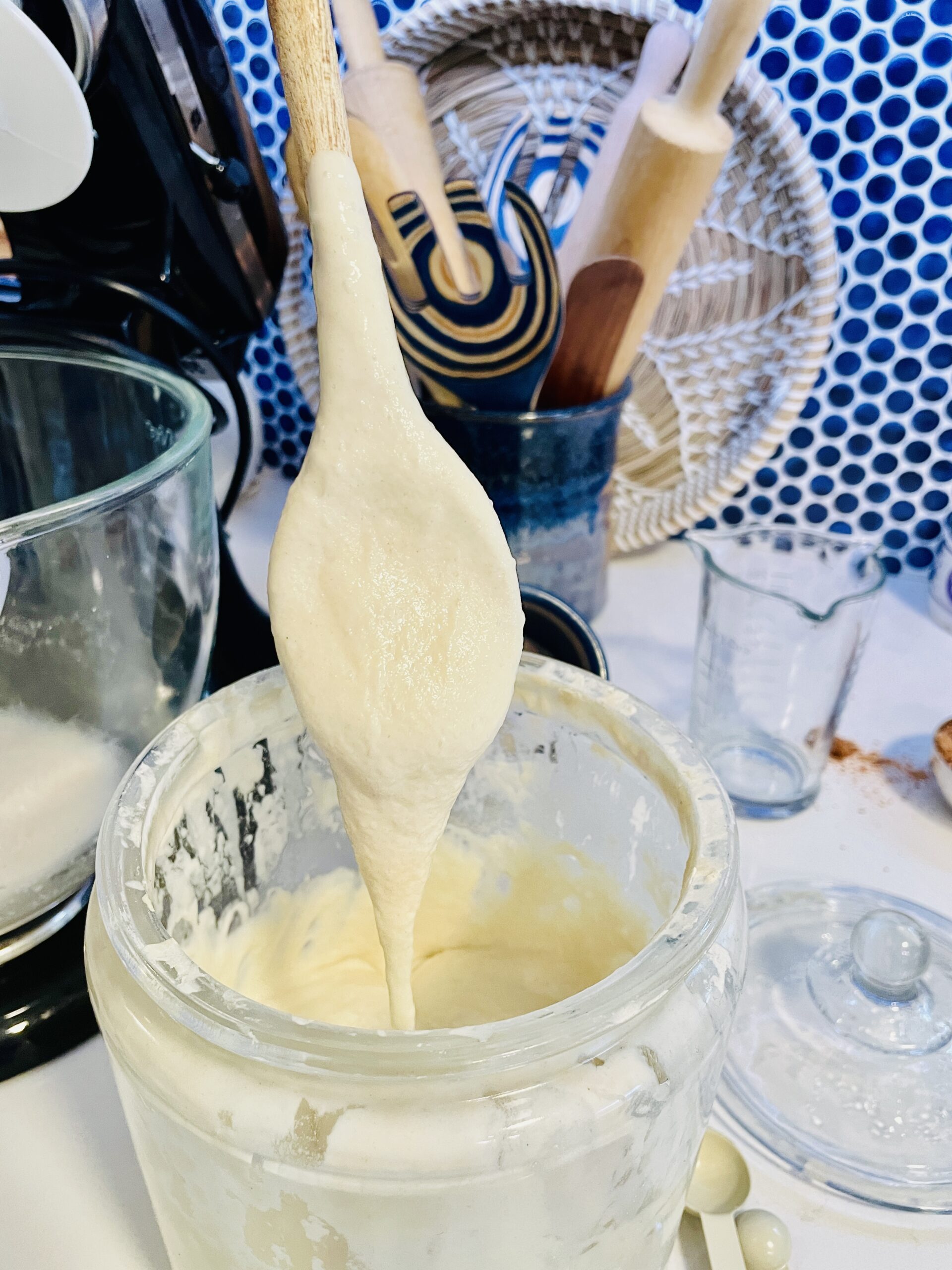
When you “feed” your starter, you have to remove a portion before adding fresh flour and water. That removed bit is the discard. I used to feel so guilty tossing it, but then I realized-Discard is just a second chance in a jar. It’s basically a ready-to-use ingredient full of tang and character. Now, I save every single drop.

The “Slow and Steady” Storage Method
When Suzie Q is in her ‘busy season’ and I’m baking daily, I keep her in a jar right on top of the fridge—it’s the warmest spot in my kitchen and keeps her active. But when we’re taking a breather, I let her rest in the fridge until we’re ready to bake again
Adding a little sourdough to the everyday
Instead of hunting down complicated, 14-step recipes, I’ve started looking at what’s already on my counter. Whenever I’m pulling out the flour for a meal, I ask myself if Suzie Q can help me make it a little more special.
Usually, the answer is a resounding yes. Because we’re a busy household, I don’t always have time for a three-day ferment. But I do have time to add that sourdough goodness to the things we already love:
- The Classics: Pancakes, biscuits, and muffins.
- Our Daily Bread: Simple sandwich loaves and bagels for the kids’ lunches.
- The Sweet Stuff: Cookies and even homemade pop-tarts.


Progress over perfection
One of the biggest lessons Suzie Q has taught me is that sourdough doesn’t have to be a masterpiece to be good. It’s okay if your loaf is a little flat or your tang is a little strong—that’s just the charm of a kitchen that’s actually lived in.
Tips I’ve learned along the way:
- Don’t Overthink It: You don’t need a PhD in fermentation. Just bake the bread.
- Cold is Fine: You don’t always have to wait for it to reach room temp. I’ve used Suzie Q straight from the fridge more times than I can count.
- Label Your Jars: Trust me on this. Flour paste and water can look suspiciously like a forgotten science project if you don’t put a name on it.
- Embrace the Flops: Some batches rise to the heavens, and some stay flatter than a pancake. That’s just the “homestead charm”.
- Start Simple: You don’t need fancy bannetons or expensive lames. You just need a willing heart and a little bit of flour.
The Grace in the Jar
It’s funny how a simple mixture of flour and water can preach a whole sermon. Sourdough reminds me that growth takes time. It reminds me that consistency matters more than perfection.
But mostly, it reminds me that even the parts of our lives we think are “extra,” ” unnecessary”, or “discarded” can be used for something beautiful if we just put them in the right hands. Honestly? That’s a lesson that reaches far beyond the kitchen.


I want to hear from you! Are you a “save it” or “toss it” kind of baker? And if Suzie Q has a cousin in your fridge, what’s your favorite way to use your discard? Let me know in the comments!
Lord Bless You, Michelle
Leave a Reply